Ballistic Shield for Police: Selection Criteria
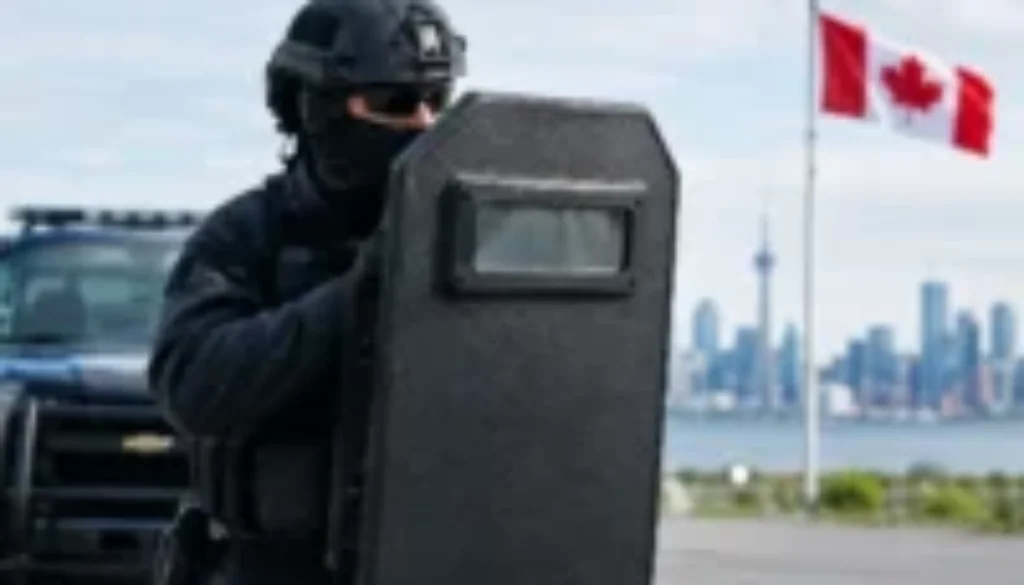
A ballistic shield for police is not simply a larger armor panel with handles. It is a team-issued protective system that must provide a stated level of coverage while remaining controllable at the speed, distance, and duration required by an agency’s operating procedures. A shield that is too heavy to deploy consistently, too narrow for its assigned task, or supported by unclear test documentation can create false confidence when officers need certainty.
For patrol, tactical teams, corrections, courthouse security, and specialized response units, the correct specification begins with the anticipated threat and ends with an accountable procurement record. The goal is not to select the largest or highest-rated shield by default. It is to select equipment that officers can carry, position, inspect, and rely on within policy.
Start With the Threat Rating
The protection rating is the first non-negotiable specification. Agencies should match the shield to their documented threat assessment, including the firearm threats likely to be encountered, the environment, response time, and whether the shield is intended for patrol deployment or a dedicated tactical role.
Handgun-rated shields are commonly selected where the primary concern is handgun ammunition. A shield rated for rifle threats addresses a substantially different threat category, but that additional protection generally brings a significant weight and mobility penalty. This is the central trade-off: higher resistance can improve protection against specified threats, while reducing the speed and endurance of the officer carrying it.
Do not treat a level designation as a complete description of performance. Request the manufacturer’s current product documentation and confirm exactly what was tested: the standard or test protocol, ammunition type, velocity, shot placement, conditioning, strike-face orientation, and tested shield configuration. A rating associated with an armor panel does not automatically apply to a complete shield with a viewport, handles, edge treatment, wheels, or accessories.
Special-threat claims require the same scrutiny. If an agency needs coverage against a particular round or rifle threat, that need should appear clearly in the purchase specification and in the supporting test evidence. Procurement teams should avoid relying on broad labels such as “tactical” or “rifle rated” without confirming the stated test conditions.
Coverage Must Match the Officer’s Assignment
Shield dimensions affect more than the amount of body coverage. They influence sightlines, movement through doorways, vehicle storage, fatigue, and how easily an officer can maintain a protected position. A larger shield may be appropriate for fixed security, rescue coverage, or deliberate tactical operations. It may be poorly suited to a patrol vehicle where rapid access and individual handling matter most.
Measure usable coverage, not only the outside dimensions listed on a specification sheet. Handle placement, viewing area, shoulder position, and the officer’s stance all affect what the shield actually covers in use. If possible, agencies should evaluate sample units with representative users wearing duty gear, outer carriers, helmets, and other issued equipment.
The edge of the shield deserves close attention. A shield may stop a specified projectile through its main body but still offer limited practical value if the officer cannot position it to protect the areas exposed by normal grip and stance. This is why an evaluation should include realistic holding positions and transitions rather than only a static measurement.
Viewports Require Separate Verification
A viewport can improve observation and communication, but it is not a cosmetic feature. It changes the shield’s weight distribution and may create a distinct protection component with its own test documentation. Confirm that the viewport is rated to the required threat level as installed, not merely that the shield body meets that level.
Optical clarity also matters. Distortion, glare, abrasion, fogging, and reduced visibility in low light can affect decision-making. Agencies should establish an inspection process for transparent armor and define when a scratched, crazed, or damaged viewport must be removed from service.
Weight Is an Operational Requirement
A shield that provides excellent ballistic performance but remains in a rack because it is difficult to carry has failed the readiness test. Published weight should be assessed in the configuration officers will actually use, including viewport, lighting, carrying straps, protective covers, and any approved accessories.
Weight should also be considered alongside geometry. Two shields with similar listed weights may feel very different because of balance, handle angle, center of gravity, and the distance between the shield and the officer’s body. Padded forearm straps, adjustable handles, and secure retention points can reduce strain, but they do not eliminate the physical demands of carrying a shield for extended periods.
For this reason, agencies commonly benefit from more than one shield category. A lighter handgun-rated option may support rapid patrol response, while a heavier rifle-rated shield may be staged for planned high-risk operations. The right answer depends on the agency’s call profile, staffing, vehicle configuration, and training capacity.
Specify the Complete Shield System
A defensible purchase specification identifies the complete delivered configuration. It should not assume that every component is included or compatible. Before issuing a purchase order, confirm the shield’s size, weight, stated ballistic rating, construction, viewport status, handle system, carrying method, and included accessories.
For a disciplined evaluation, procurement personnel should document at least the following:
- The intended mission and defined threat level for each shield category.
- Product-specific ballistic test reports, certificates, and manufacturer documentation.
- Overall dimensions, usable coverage area, weight, and configuration details.
- Viewport rating and inspection requirements, if a viewport is included.
- Warranty terms, expected service life, storage guidance, and incident-replacement support.
Documentation supports more than purchasing compliance. It gives armorers and supervisors a clear baseline for inspection, inventory control, training, and replacement decisions. It also helps prevent mismatched components from being treated as a tested system.
Durability, Storage, and Inspection Matter
Ballistic equipment is expected to work after months or years of storage, transport, and repeated handling. Shield construction should therefore be evaluated for the conditions of service: vehicle storage, temperature swings, moisture, abrasions, impacts, and frequent movement through public buildings or field environments.
A shield cover can help protect the ballistic surface from routine wear, but it should not conceal damage during inspection. Agencies should train designated personnel to check the strike face, edges, handles, straps, fasteners, viewport, and identification labels at a defined interval. Any shield involved in an impact, suspected ballistic event, or significant drop should be removed from normal service pending manufacturer guidance and agency review.
Storage instructions are part of the equipment requirement. Avoid placing heavy objects on a shield, exposing it to unnecessary heat, or using it as a work surface. A clear vehicle mounting solution protects the equipment while ensuring it can be accessed when needed.
Training Turns Equipment Into Capability
Issuing a shield without familiarization training leaves officers to solve weight, grip, visibility, communication, and movement problems during a critical incident. Training should be delivered under agency policy and cover safe deployment, inspection, storage, communications, and coordination with other officers. It should also reinforce the limits of the shield’s rated protection.
The shield should be incorporated into the broader protective equipment program. Officers need to understand how their assigned body armor, helmet, medical equipment, and duty gear interact with shield use. Supervisors need an accountability process for inspections and removal from service. This is where a technically sound purchase becomes a reliable field capability.
CANARMOR supports professional buyers with clearly identified ballistic protection specifications, product documentation, and service programs designed for long-term equipment accountability. For agency procurement, the most useful conversation begins with the intended threat level, required coverage, deployment environment, and the documentation needed for approval.
The strongest shield program is built before the first unit is issued: specify the threat honestly, verify the complete configuration, let representative officers assess usability, and keep inspection and replacement responsibilities clear. Those decisions give personnel protective equipment they can use with confidence when time is limited and the consequences are real.