Bulletproof Vest Sizing Guide for a Proper Fit
A vest that is too large can shift when you move. One that is too small can leave critical areas uncovered or become difficult to wear through a full shift. This bulletproof vest sizing guide explains how to take useful measurements, evaluate coverage, and set up soft armor or hard plates for a secure, wearable fit.
Body armor sizing is not the same as shirt sizing. A large uniform shirt does not automatically mean a large carrier, and a broad chest does not always require the widest ballistic panel. The goal is controlled coverage of the torso, with enough mobility to drive, climb stairs, sit, communicate, and perform your assignment without the vest riding up or moving out of position.
Start With the Manufacturer’s Size Chart
Always begin with the size chart for the specific vest, carrier, panel, or armor plate you are considering. Cuts vary between covert vests, overt carriers, concealable soft armor, and plate carriers. A carrier may be adjustable across several body sizes, while its ballistic panels or plates have fixed dimensions.
Use a flexible tape measure and take measurements over a light base layer or duty clothing similar to what you expect to wear under the armor. Do not measure over a heavy jacket unless the vest is intended to be worn over that jacket. If possible, have another person take the measurements so the tape stays level and does not pull too tightly.
For most soft armor vests, chest circumference is the starting point. Measure around the fullest part of the chest, keeping the tape level across the back. Then measure your waist or abdomen at the location specified by the vest manufacturer. These numbers help establish the appropriate panel width and the adjustment range needed at the side closures.
Torso length matters just as much. Measure from the top of the sternum area down toward the navel while seated and standing. This helps identify a front panel length that provides meaningful coverage without pressing excessively into the beltline or abdomen when you sit.
How Bulletproof Vest Coverage Should Fit
Proper body armor should cover the vital area of the torso without interfering with natural movement. Soft armor panels should sit flat against the body, with the front panel centered over the chest and the rear panel centered over the back. The vest should not hang low like a loose outer garment, nor should it be tightened so aggressively that breathing becomes restricted.
A properly positioned front panel generally begins high on the chest, near the suprasternal notch at the base of the neck. It should extend down far enough to protect the upper torso while still allowing you to sit, bend, and access duty equipment. If the bottom edge consistently digs into the abdomen or pushes upward while seated, the panel may be too long, positioned too low, or paired with an incompatible belt setup.
The rear panel should cover the upper back and remain centered between the shoulder blades. A rear panel that slides to one side, rides high toward the neck, or hangs below the lower back needs adjustment. Before deciding a vest is the wrong size, check the shoulder straps, side closures, and the way the carrier is loaded.
Coverage is a trade-off. More material can offer greater protective area, but it can also add heat, weight, and bulk. Personnel working long patrols, vehicle assignments, executive protection, or plainclothes details may prioritize mobility and concealment differently than tactical teams operating in overt carriers.
Measuring for Soft Armor and Concealable Vests
Concealable body armor is designed to sit close to the body, usually under a uniform shirt, jacket, or outer garment. The fit should be close enough to prevent panel movement, but not so tight that the carrier creates pressure points or visible pulling across the chest.
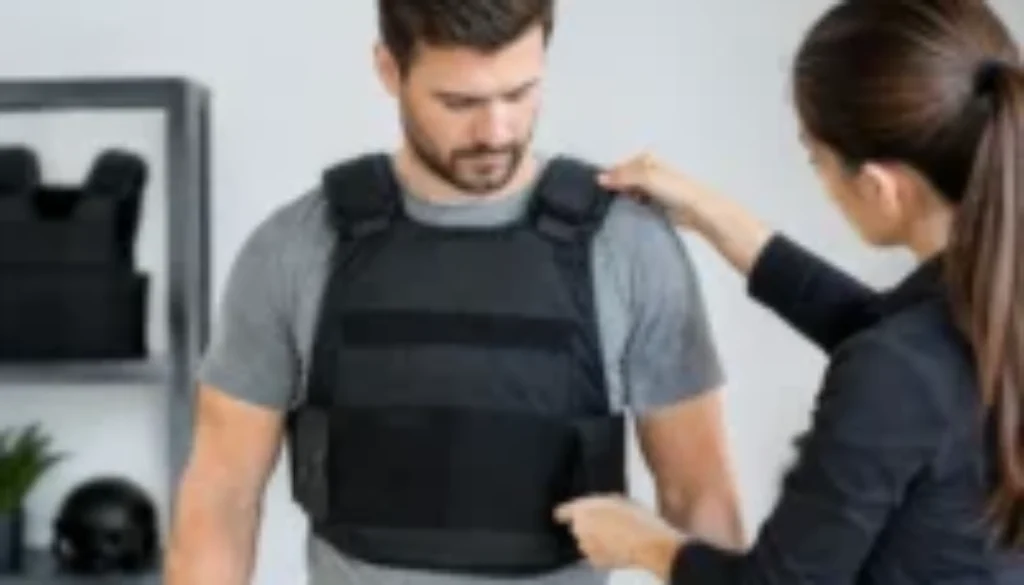
When trying on a concealed vest, stand naturally with your arms relaxed. Check that both shoulder straps are adjusted evenly and that the front and rear panels align at a similar height. Tighten the side closures until the vest is secure, then take a full breath, raise your arms, sit in a chair, and bend forward slightly. The armor should remain in place without pinching sharply or forcing the front panel into your throat.
For users with a larger chest, narrower waist, or other body proportions that do not align with standard unisex sizing, do not size up automatically. An oversized panel can extend too far under the arms and reduce comfort or arm movement. A properly designed vest may use adjustable side coverage, shaped panels, or a cut intended for the wearer’s body type.
Women should use armor built or fitted for female anatomy whenever available. A vest that merely tightens around the chest without accommodating body shape can create gaps, panel distortion, discomfort, and poor concealment. Proper fit means the ballistic package remains flat and stable, not compressed or folded to force a particular size.
Sizing Hard Armor Plates and Plate Carriers
Hard armor plates are sized by torso coverage, not by body weight or shirt size. The plate should protect the central upper chest and upper back while allowing a natural shoulder pocket for shouldering a rifle. A plate that is too wide may interfere with arm movement and weapon presentation. A plate that is too narrow may leave more of the torso exposed than necessary.
A common reference point for front plate width is the distance between the inner edges of the collarbones. Plate height is determined by the vertical distance from the upper chest to a point several inches above the navel, depending on the wearer’s torso and the required mission profile. These are starting measurements, not a substitute for trying the plate in the intended carrier.
SAPI-cut, swimmer-cut, and shooter-cut plates can fit differently even when their nominal dimensions are similar. SAPI-cut plates offer a familiar balance of coverage and shoulder clearance. Swimmer-cut and shooter-cut options remove more material around the upper corners, improving mobility for some users but reducing protected area compared with a fuller cut.
The carrier must match the plate dimensions. A 10 x 12-inch plate should sit securely in a carrier pocket built for that size. It should not sag, rotate, or have enough empty space to shift during normal movement. Use the carrier’s internal retention flap, elastic, or securing system exactly as intended.
Adjust the Carrier Before Judging the Size
Many fit problems are adjustment problems. Set the shoulder straps first so the front and rear plates or panels sit at the correct height. Then adjust the cummerbund or side closures for a firm, even hold around the torso. Work in small increments and check the fit after each adjustment.
A carrier should not bounce when you walk or run. It also should not restrict full breaths, prevent you from sitting upright, or cause numbness in the shoulders. If the vest shifts during movement, tighten and balance the adjustment system before moving to a different size. If the carrier feels consistently restrictive despite proper adjustment, the cut or size may be wrong for your body.
Load the carrier as you will use it in the field before making the final call. Magazine pouches, medical kits, radios, cameras, rifle plates, and side armor change how the system rides. A plate carrier that feels acceptable empty may pull forward once equipment is mounted. Keep essential equipment balanced and avoid placing excessive weight on one side.
Conduct a Practical Fit Check
A mirror check is useful, but it is not enough. Once the vest is fitted, perform a short movement check in the clothing and equipment you expect to use. Walk, sit in a vehicle or chair, climb a few stairs, reach overhead, kneel, and practice normal work movements. Confirm that the armor remains centered and that you can access the equipment required for your role.
Watch for warning signs: shoulder straps that dig in, panels that overlap incorrectly, a front plate sitting too low, side closures that separate under movement, or armor that rides up when seated. Do not accept persistent discomfort as normal. Some break-in is expected with new carriers, but ballistic panels and plates should not be bent, folded, altered, or forced into an improper fit.
NIJ ballistic ratings such as III-A, RF2, and RF3 describe tested protection performance, not vest sizing. A correctly rated armor system can only perform as intended when its components are compatible, undamaged, properly installed, and positioned correctly on the body.
A final fitting with an experienced armor specialist can be worthwhile for first-time buyers, agencies issuing multiple vests, and anyone combining soft armor, rifle plates, side protection, or a duty belt. The right size is the one that stays in place, covers the intended area, and lets you carry out your responsibilities with confidence. Take the time to test that fit before the vest becomes part of your daily readiness.