What Ballistic Panel Testing Results Actually Prove
A ballistic panel may look like a simple insert, but its protective value is established long before it enters a carrier. Ballistic panel testing evaluates whether the panel stops its stated threat, limits trauma behind the armor, and maintains performance after defined environmental exposure. For law enforcement, security teams, military personnel, and qualified civilian buyers, those results are the difference between a product claim and a defensible protection decision.
A rating printed on a label is only useful when you understand what was tested, how it was tested, and whether the panel being purchased matches the tested construction. Weight, thickness, coverage area, and fit still matter, but they must be considered after the protection requirement is confirmed.
What Ballistic Panel Testing Measures
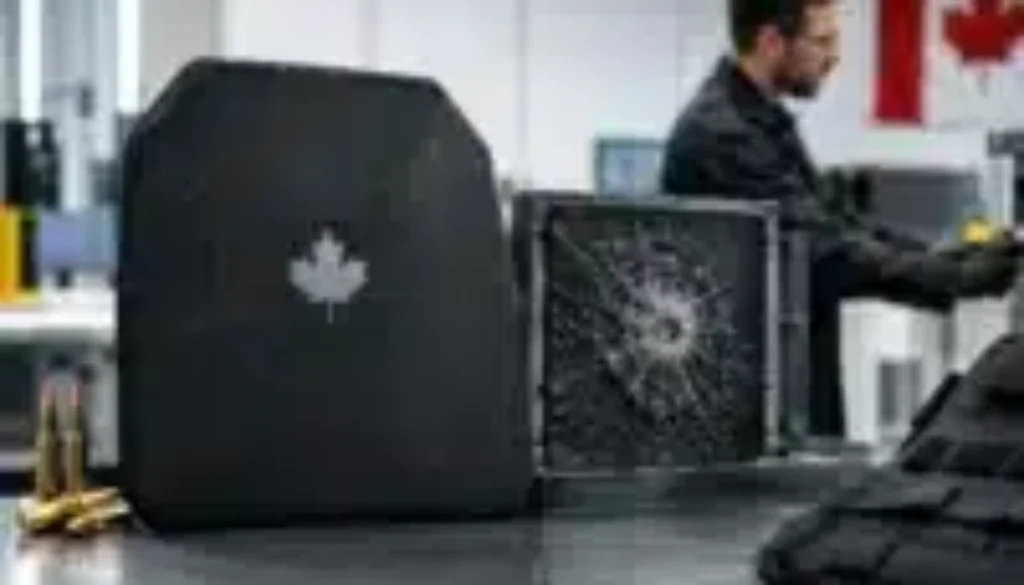
Ballistic testing is designed to answer a controlled question: can this specific armor construction defeat a defined projectile under defined conditions? The answer depends on more than whether a round appears to stop. Test protocols specify ammunition type, projectile velocity, shot placement, number of impacts, armor conditioning, and acceptable deformation on the body-facing side of the panel.
For soft armor panels, the test article is commonly mounted against a calibrated backing material that records backface deformation. This deformation represents the blunt-force effect transmitted through the armor after a projectile is stopped. A panel that prevents penetration may still produce excessive deformation, which is why a pass condition generally addresses both penetration resistance and trauma limits.
Testing also assesses consistency. A single successful shot through the center of a panel does not establish dependable field performance. Legitimate protocols require impacts in specific locations, including areas that can challenge the panel construction. Edge distance, overlap zones, seams, ballistic stitching, and shaped contours can all affect how armor responds.
The Threat Must Match the Rating
A handgun-rated soft panel is not rifle armor. Likewise, a plate designed for rifle threats is not automatically the right solution for a concealable vest or a full-coverage patrol carrier. Buyers should begin with the threats they reasonably face, then select the appropriate protection category.
NIJ Standard 0101.06 remains widely referenced across the armor market, using classifications such as Level II, Level IIIA, Level III, and Level IV. NIJ Standard 0101.07 uses an updated rating structure that separates handgun and rifle threats, including HG and RF designations. A product description should state the applicable standard or test protocol clearly, rather than relying on broad terms such as “bulletproof” or “tactical grade.”
Be especially cautious with informal labels. “Level III+” is commonly used in the market to describe plates tested against threats beyond a baseline Level III test, but it is not itself a standalone NIJ protection level. The relevant question is always which specific rounds, velocities, and conditions the panel was tested to defeat.
How the Test Process Affects Real-World Confidence
Laboratory testing cannot duplicate every operational condition, but credible testing is intentionally demanding. Armor may be conditioned before live-fire evaluation through exposure to heat, cold, humidity, moisture, mechanical wear, or other environmental factors specified by the protocol. The purpose is to determine whether protection remains intact after stresses that can occur during storage, transport, and field use.
Shot placement is equally important. A panel can perform differently near an edge, at a curved area, around a seam, or where ballistic material changes orientation. For multi-panel vests, overlap is part of the protective system. A properly tested configuration must account for how the ballistic inserts sit in the intended carrier and how coverage is maintained during movement.
Velocity control matters as well. Ammunition is chronographed because projectile speed has a direct effect on armor performance. A test report that identifies the projectile but not the required velocity range leaves out a critical part of the result. Higher velocity can substantially increase the challenge, even when the ammunition designation appears familiar.
For hard armor, testing may also examine multi-hit performance, strike-face durability, and protection after conditioning. Ceramic, polyethylene, and composite plates each have different advantages and limitations. Ceramic plates can provide effective rifle protection at manageable weight, but damaged plates require careful inspection. Polyethylene plates can be exceptionally light and buoyant, but heat exposure, thickness, and the stated threat profile must be evaluated. Steel plates carry different concerns, including weight and fragmentation management. No material should be selected by marketing language alone.
A Test Report Is Not the Same as Certification
This distinction matters during individual purchases and agency procurement. A ballistic test report generally documents the performance of samples submitted to a laboratory. It can be highly useful, particularly when it identifies the exact model, construction, test conditions, ammunition, velocities, and results.
Certification or a compliant model listing is a broader claim. Depending on the standard and program involved, it may include defined quality-control requirements, ongoing verification, labeling rules, and oversight of the production model. A sample tested months or years earlier is not automatically proof that every panel currently leaving a factory is built to the same specification.
Ask whether the item being offered is the same model and configuration represented in the documentation. Small changes can matter: panel dimensions, material layup, foam package, strike face, cover construction, or manufacturing location may affect performance. A reliable supplier should be able to explain the rating, identify the relevant documentation, and state whether the armor is tested, certified, or compliant with a named standard.
What to Review Before Ordering Ballistic Panels
Protection documentation should support the actual mission, not replace procurement judgment. Before purchasing, confirm these operational details:
- The stated protection level and the exact threats tested
- The applicable test standard and edition, such as NIJ 0101.06 or 0101.07
- Whether the documentation applies to the exact panel model, size, and configuration
- The panel’s coverage dimensions, weight, thickness, and intended carrier system
- Care, storage, inspection, warranty, and replacement requirements
For body armor inserts, size is not a cosmetic choice. A panel that is too small can leave critical areas uncovered, while an oversized panel can interfere with sitting, weapon presentation, vehicle work, or all-day wear. Soft armor should sit correctly within the carrier, remain properly oriented, and retain the designed overlap where applicable.
The lightest option is not always the most suitable, and the highest advertised rating is not always the best operational choice. Executive protection, uniformed patrol, corrections work, tactical entry, and civilian home defense create different threat profiles and different tolerance for bulk. The right panel is the one that provides verified protection without causing the wearer to leave it behind because it is too heavy, too restrictive, or poorly fitted.
Documentation, Inspection, and Service Life
Armor performance does not end when a panel passes testing. The panel must be handled and maintained according to its manufacturer instructions. Do not fold soft armor unless the manufacturer explicitly allows it. Do not leave armor in extreme heat for extended periods, place heavy equipment on it, modify ballistic inserts, or use a compromised carrier as though it has no effect on system fit.
Regular inspection should look for cuts, crushed areas, delamination, water intrusion, abnormal creasing, damaged covers, and degraded hook-and-loop closures. After a ballistic impact, armor should be removed from service and evaluated under the manufacturer’s incident-replacement process. A stopped round is evidence that the panel did its job, not a reason to assume it remains suitable for continued use.
At CANARMOR, buyers should expect protection information to be presented in terms they can verify: stated ratings, test references, product specifications, and support for selecting the right configuration. That level of clarity is particularly valuable when a vest or panel will be worn for long shifts, issued across a team, or relied on during an emergency.
Ballistic Panel Testing Is a Procurement Requirement
The strongest purchasing decision connects three facts: the threat you need to address, the panel that was actually tested, and the way that panel will be worn or deployed. If any one of those facts is unclear, the protection decision is incomplete.
Request documentation, read the stated limitations, verify fit before relying on the equipment, and treat replacement schedules as part of readiness planning. The panel you carry should not merely have a rating. It should have a testable reason to be trusted.