When Is Body Armor Replacement After Shooting Due?
A vest that stopped a round has done its job, but that does not automatically make it ready for the next call. Body armor replacement after shooting is an operational decision involving the ballistic package, the strike location, the armor’s rating, visible damage, and the manufacturer’s written instructions. The safe default is straightforward: remove impacted armor from service immediately and replace it unless the manufacturer has specifically evaluated and cleared it for continued use.
A carrier may look intact. A plate may show only a small mark. Neither observation proves the protective material can perform to its stated rating again. Ballistic protection is life-safety equipment, not equipment to be judged by appearance alone.
Why an Impact Changes the Replacement Decision
Armor is engineered to manage a defined threat under controlled test conditions. Those conditions do not duplicate every field event. The angle of impact, projectile type, strike location, distance, prior wear, moisture exposure, and the condition of the carrier all affect what happens during a real incident.
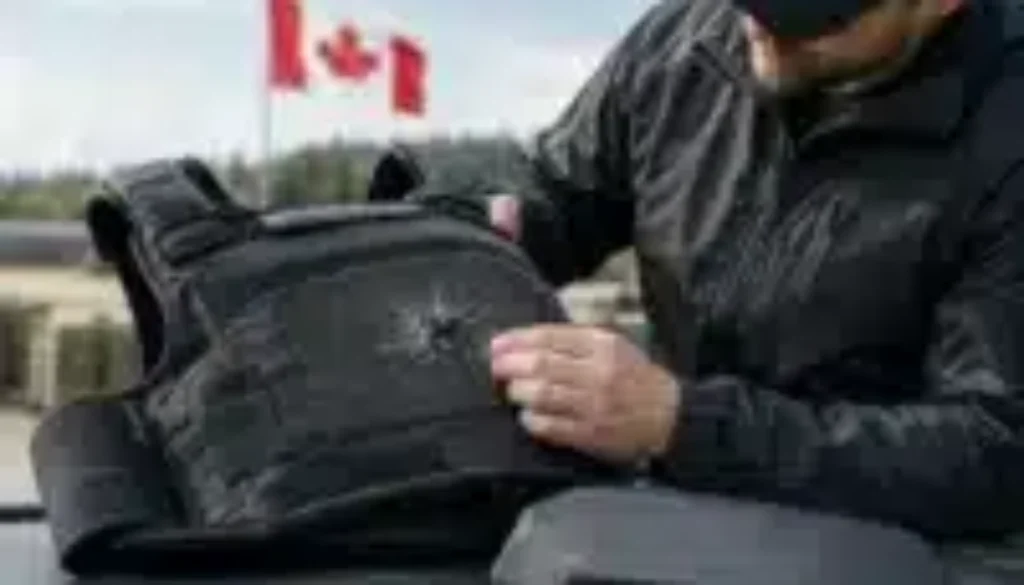
Soft armor panels work by catching and dispersing energy through layered ballistic fibers. A projectile that is stopped can stretch, separate, crush, or otherwise damage fibers in a localized area. The damage may not be obvious through the panel cover. Even when the vest has no penetration, backface deformation and internal fiber disruption can compromise confidence in its future performance.
Hard armor plates respond differently. Many rifle-rated plates are designed for multiple hits under a prescribed test pattern, but that is not a promise of unlimited field use. Repeated hits in close proximity, edge strikes, cracks, broken ceramic, crushed polyethylene, damaged wraps, or plate curvature changes can alter protection. A plate that defeats one threat may no longer provide its original certified performance across the full strike face.
For this reason, an armor rating should never be interpreted as a field-reuse guarantee. Check the label for the exact NIJ or RF classification, model number, and manufacturer guidance. A plate rated for a particular threat is only rated while it remains in the condition required by that certification and its instructions.
Immediate Actions After a Shooting Incident
The first priority is medical care and scene safety. Once those needs are addressed, treat the armor as both potentially damaged protective equipment and possible evidence. Do not put it back on, lend it to another user, or attempt to test it yourself.
Use the following process to preserve the equipment and support a defensible replacement decision:
- Remove the vest, carrier, panels, plates, helmet, or other impacted protective item from service and clearly mark it as unusable.
- Photograph the front and back of the item, including the strike area, labels, serial numbers, lot numbers, and any visible deformation or debris.
- Preserve the equipment in the condition required by your agency, investigator, insurer, or legal counsel. Do not cut open a panel or remove embedded material without authorization.
- Record the incident date, known threat information, wearer name or asset assignment, and whether the armor was exposed to water, fire, chemicals, or crushing forces.
- Issue a correctly sized replacement before the user returns to an assignment that requires ballistic protection.
If the event occurred during an agency operation, follow department evidence and procurement procedures before transferring the item to a manufacturer or supplier. For private security teams and individual owners, preserve the same documentation. Clear records protect the user, support an incident claim, and help establish whether other equipment from the same lot needs inspection.
Body Armor Replacement After Shooting: What Must Be Replaced?
The impacted ballistic component should be considered the first replacement priority. If a soft armor panel takes a strike, replace that panel or the complete matched panel set according to the manufacturer’s instructions. Do not substitute a panel from another model, size, or protection package simply because it fits the carrier pocket. Coverage, overlap, fit, and certification may change.
For hard armor, replace the struck plate unless the manufacturer provides documented evaluation and clearance for that exact model and incident. Do not rely on internet advice, informal range testing, or a visual check. Ceramic damage can exist below the outer wrap, while polyethylene and composite plates can suffer structural changes that are not apparent in the field.
The carrier also requires inspection. Replace it if the impact tore seams, damaged retention straps, distorted plate pockets, compromised hook-and-loop closures, contaminated the material, or affected the carrier’s ability to position armor correctly. A serviceable plate inside a carrier that shifts, sags, or exposes critical coverage is not mission-ready protection.
Consider associated equipment as well. A blunt impact can damage trauma pads, plate backers, shoulder hardware, communication routing, or attached medical gear. If a helmet, ballistic shield, or other protective item was struck or dropped during the incident, isolate it for evaluation rather than assuming it remains serviceable.
There are limited cases where an unstruck item from the same loadout may remain in service. For example, an undamaged rear plate may not require replacement when only the front plate was hit. That decision still depends on whether the rear plate was dropped, crushed, exposed to contaminants, or otherwise affected during the event. Inspect it against the manufacturer’s criteria and your organization’s policy.
Inspection Is Not the Same as Recertification
Routine inspection is necessary, but it has limits. Users and equipment managers can identify obvious concerns such as cracks, dents, delamination, torn covers, water intrusion, loose stitching, faded labels, or damaged closures. They cannot confirm that a previously impacted armor panel still meets its stated ballistic rating.
Only an authorized manufacturer assessment can address the specific product and incident conditions. Even then, replacement may be the appropriate result because a field incident falls outside the conditions covered by routine warranty or certification testing.
Never conduct an informal live-fire test on issued or personal armor. That can create additional damage, destroy evidence, and provide misleading results. Ballistic testing requires controlled ammunition, calibrated velocity, proper mounting, environmental conditioning, and defined measurement methods. One improvised test shot cannot establish the armor’s performance across its rated threat range.
Selecting the Correct Replacement Armor
Replacement is an opportunity to confirm that the protection package still matches the user’s role. Start with the threat requirement. Handgun-focused patrol, executive protection, corrections, private security, tactical response, and rifle-threat environments do not always require the same armor configuration.
Match the replacement to the required protection level and the original coverage area. Check the armor label, not just the product description. For newer rifle armor, RF classifications may apply; for existing inventory, you may see legacy NIJ level designations. The key is to procure a product clearly labeled for the threats your policy or risk assessment requires.
Fit deserves equal attention. A replacement vest or carrier must sit at the correct height, maintain intended front and rear coverage, and allow the wearer to move, sit, drive, and access essential equipment. Oversized armor can interfere with mobility, while undersized armor can leave avoidable gaps. If the wearer’s body dimensions or duty requirements have changed, conduct a new fitting rather than duplicating an old size without verification.
For organizations, standardize replacement decisions where practical. Maintain records of model numbers, sizes, issue dates, serial numbers, inspection dates, and incident history. This reduces delays when an immediate replacement is needed and helps procurement teams avoid mixing incompatible panels, carriers, and plates.
CANARMOR’s incident-replacement guarantee and long-term warranty structure are designed to support customers who need clear accountability after a real protective event. Confirm the applicable terms, documentation requirements, and product-specific instructions before beginning a claim or replacement request.
Keep the Replacement Process Ready Before an Incident
The best time to decide how you will replace armor is before it is needed. Agencies should maintain a replacement policy, identify approval contacts, keep accurate issue records, and plan for loaner or spare protection where operationally necessary. Individual buyers should retain their proof of purchase, product labels, care instructions, and any certification documentation in a secure location.
When armor stops a threat, treat that outcome with the seriousness it deserves. Preserve the evidence, remove the impacted equipment from service, and put properly rated replacement protection back in the wearer’s hands before the next assignment demands it.