
NIJ Standards Comparison of 0101.06 and 0101.07
A vest marked Level IIIA and a plate marked RF2 may both be serious protective equipment, but they do not communicate the same test protocol or threat coverage. This NIJ standards comparison separates the legacy terminology many buyers know from the current NIJ 0101.07 framework, so you can specify armor by the threats it is expected to defeat rather than by a label alone.
Why NIJ Standard Numbers Matter
The National Institute of Justice publishes voluntary performance standards for ballistic-resistant body armor. Manufacturers, agencies, and purchasers rely on these standards because they establish repeatable test procedures: specified ammunition, shot placement, velocities, environmental conditioning, backface deformation limits, and sampling requirements.
The standard number is not a marketing detail. It tells you which generation of testing is associated with the armor. For years, NIJ Standard 0101.06 was the familiar reference point for soft armor and hard rifle plates. NIJ Standard 0101.07 is the newer framework, built to improve clarity around handgun and rifle threats and to account for ammunition that has become operationally relevant.
A rating should always be read with the manufacturer’s documentation, product label, and test information. The rating identifies a defined test threat. It does not mean the armor defeats every round with a similar caliber designation, every velocity, or repeated impacts in the same area.
NIJ Standards Comparison: 0101.06 vs. 0101.07
NIJ 0101.06 uses the long-established armor designations IIA, II, IIIA, III, and IV. In practical terms, IIA, II, and IIIA are handgun armor levels, while III and IV are rifle armor levels. This vocabulary remains common in product descriptions, agency inventories, and procurement specifications.
NIJ 0101.07 divides the classifications by armor type and threat family. Handgun armor is labeled HG1, HG2, and HG3. Rifle armor is labeled RF1, RF2, and RF3. The separation is useful because it prevents a common purchasing error: treating a rifle plate and a soft vest as though they can be compared on one continuous scale.
The newer system is not a simple renaming exercise. Testing requirements, ammunition selections, conditioning protocols, and certification processes differ. A 0101.06 Level IIIA product should not automatically be called HG2 or HG3. Likewise, a 0101.07 RF2 plate should not be presented as a direct replacement for a legacy Level III plate without reviewing its actual threat coverage and documentation.
Handgun armor: legacy levels and HG ratings
Under 0101.06, Level IIIA is the most widely recognized soft-body-armor designation. It is generally selected for law enforcement, executive protection, security personnel, and civilians who need protection against common higher-energy handgun threats while retaining practical concealability. Levels IIA and II address lower threat profiles and are less common for new operational purchases where weight differences may be modest compared with the protection sacrificed.
Under 0101.07, HG1 and HG2 define distinct handgun threat levels, while HG3 adds testing against more demanding handgun threats. The right choice depends on the issued sidearms, criminal threat intelligence, assignment requirements, and whether the vest will be worn covertly for an entire shift or as part of an overt tactical configuration.
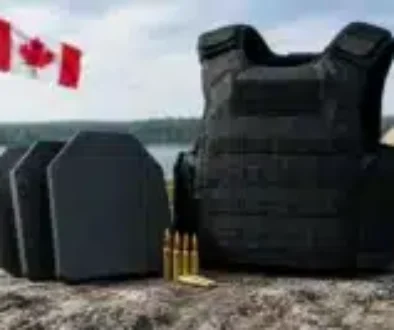
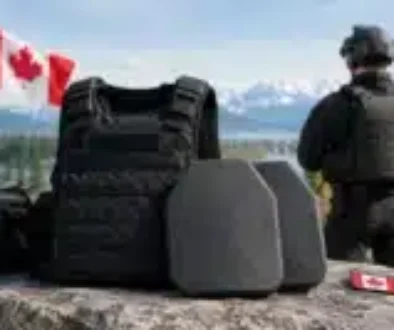
Do not assume that a soft vest is rifle-rated because it contains a trauma pad, a stab panel, or a carrier with plate pockets. Soft armor panels are designed for the handgun threats stated on their label. Rifle protection requires appropriately rated hard armor plates or rifle-rated flexible armor specifically built for that purpose.
Rifle armor: Level III and IV vs. RF1, RF2, and RF3
Legacy Level III armor is associated with 7.62x51mm M80 ball testing. Level IV is associated with .30-06 M2 armor-piercing testing. These descriptions are useful shorthand, but they can hide critical differences between plate designs. A plate that stops M80 ball is not necessarily tested for M855 green tip, and a plate capable of defeating one rifle threat should not be assumed to defeat another based only on caliber.
NIJ 0101.07 makes this distinction more visible. RF1 covers the baseline rifle threat represented by M80 ball. RF2 builds on that requirement by including the 5.56mm M855 threat. RF3 is the highest rifle category and includes armor-piercing rifle-threat testing in addition to the lower RF requirements.
For many patrol, security, and civilian preparedness applications, the decision point is often between an RF1-type requirement and protection that includes M855. For tactical teams and assignments with credible armor-piercing rifle concerns, RF3 may be appropriate. The trade-off is real: higher threat coverage can add weight, thickness, stiffness, and cost. The strongest plate on paper is not automatically the best plate for a role that requires long-duration wear, vehicle work, climbing, or rapid movement.
Certification, Compliance, and Marketing Claims
The words “NIJ certified,” “NIJ tested,” and “NIJ compliant” are not interchangeable.
NIJ certification refers to participation in the applicable NIJ Compliance Testing Program and inclusion on the NIJ Compliant Products List when the model meets program requirements. Certification is tied to a specific model and configuration. It should not be assumed to apply to every size, cut, material option, or product variation sold under a similar name.
“Tested to” may mean a product was evaluated by an independent laboratory against certain elements of an NIJ protocol. That can provide meaningful information, particularly when test reports identify the laboratory, ammunition, shot count, conditioning, and results. However, a single test report is not the same as active NIJ certification.
“Compliant” can also be used broadly in marketing. A responsible buyer should ask what standard version is referenced, what threat level is claimed, and whether the exact product is certified or independently tested. Product certificates and clear ballistic labels help turn a general claim into a procurement decision you can defend.
What the Standard Does Not Tell You
A ballistic rating is essential, but it is not the entire equipment specification. It does not tell you whether a plate is single-curve or multi-curve, whether it is steel, ceramic, polyethylene, or a composite design, or how it will carry over an eight-hour shift.
It also does not replace fit. A properly sized vest protects the vital area without interfering with a duty belt, rifle stock placement, breathing, or seated movement. A plate that is too small may leave avoidable gaps. A plate that is too large can restrict mobility and may not sit correctly in the carrier.
Backface deformation also matters. Armor may stop the projectile while transmitting blunt-force energy into the body. NIJ protocols set limits, but the wearer can still experience injury. No ballistic product eliminates risk, and no rating changes the need for medical planning, training, and sound operational judgment.
Selecting Armor by the Actual Threat
Start with the weapons and ammunition you are likely to encounter, not the highest number available. A plainclothes investigator may need discreet HG-rated soft armor that can be worn consistently. A uniformed officer may need overt handgun protection with the ability to add rifle plates. A security team protecting a fixed site may prioritize rifle coverage, while a mobile detail may place greater weight on mobility and fatigue management.
Then verify the configuration. Confirm the standard version, the stated threat level, whether the armor is certified or independently tested, the date of manufacture, the warranty terms, and the required care procedures. Ballistic panels and plates should be inspected regularly and removed from service after a ballistic strike unless the manufacturer specifically states otherwise.
For agencies and organizations, write procurement requirements around threats and evidence. Specify the ammunition threats that matter, the minimum certification or testing documentation required, acceptable weight and size ranges, carrier compatibility, and replacement procedures after an incident. This avoids receiving armor that technically carries a familiar rating but does not match the mission.
CANARMOR identifies ballistic ratings and product test information so buyers can compare protection with a clear understanding of what the equipment is designed to do. That documentation is especially valuable when replacing older Level IIIA, III, or IV equipment with products labeled under the newer HG and RF system.
The best armor decision is the one that matches the documented threat, fits the wearer correctly, and will be worn when protection is needed. Treat the rating as the start of the selection process, then verify every detail that turns a stated standard into dependable field protection.