Choosing Body Armor for Private Security Teams
A security officer working a quiet front desk faces a different risk profile than a patrol team responding to an alarm at an industrial site. The right body armor for private security begins with that distinction. Protection must match the assignment, remain wearable through a full shift, and allow the officer to move, communicate, drive, and respond without hesitation.
For security managers, the purchase decision also reaches beyond a single vest. A consistent armor policy, documented inspection process, correct sizing, and clear training standards help ensure equipment is ready when it matters. Armor is protective equipment, not a substitute for sound procedures, situational awareness, or appropriate response protocols.
Start With the Actual Assignment
Do not choose armor by assuming every post requires the highest rating available. More protection can mean more weight, heat retention, bulk, and fatigue. A vest that officers remove halfway through a shift is not an effective protective system.
Begin by evaluating the work environment, expected threat level, shift length, and mobility requirements. A concierge or access-control officer may need a discreet, concealable soft armor vest that presents professionally under uniform clothing. A mobile patrol officer might benefit from an overt carrier with soft armor and the ability to add rifle-rated plates when the assignment or threat assessment calls for it.
Consider how the team works. Officers who spend most of the day seated in vehicles need a configuration that stays comfortable against a seat back and does not interfere with the duty belt. Personnel assigned to event security may prioritize ventilation, range of motion, and a low-profile appearance. Critical infrastructure, cash logistics, high-risk transport, and armed response roles may justify a more scalable platform.
A written risk assessment should guide the specification. It should identify likely weapon threats, whether officers work alone, how quickly law enforcement can respond, and what movement demands the post creates. The goal is not to overbuild every vest. It is to equip each role for a credible, documented threat.
Understanding Protection Levels for Private Security
Most routine armed and unarmed security assignments begin with handgun protection. NIJ III-A is a common soft armor rating for stopping specified handgun threats, including .44 Magnum and .357 SIG under the NIJ 0101.06 standard. It remains widely understood in the security industry and is often listed in agency requirements.
NIJ standards are evolving. The newer NIJ 0101.07 standard uses classifications such as HG1 and HG2 for handgun protection, and RF1, RF2, and RF3 for rifle protection. Procurement documents may still reference legacy ratings, so security companies should confirm exactly which standard, test report, and threat rating apply to the armor being considered.
Soft armor is generally the practical foundation for daily wear because it is lighter and more flexible than hard plates. It is designed for its certified handgun threats, not rifle fire. If the risk assessment includes rifles, officers require rifle-rated hard armor plates in an appropriate carrier. A plate carrier alone is not ballistic protection.
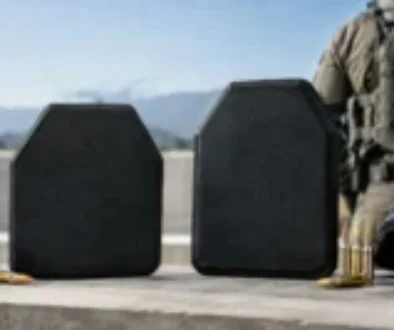
Hard armor introduces necessary trade-offs. Rifle plates add weight and can reduce comfort during long standing or walking shifts. Plate shape also matters. A SAPI-style or shooter cut can provide better shoulder mobility than a full rectangular plate, while larger cuts may offer more coverage. The correct balance depends on duty requirements, not appearance.
Do Not Treat Ratings as General Labels
Terms such as “bulletproof” are convenient, but they can create false confidence. Ballistic armor is tested against specific threats, velocities, shot placements, and conditioning requirements. It does not make the wearer invulnerable, and it does not automatically provide stab, spike, or slash resistance.
For officers working in corrections-adjacent roles, hospital security, entertainment venues, or close-contact interventions, a separate stab- or spike-resistant requirement may be relevant. Select protection based on the documented hazard. A ballistic panel should not be assumed to address edged-weapon threats unless its certification says it does.
Concealed, Overt, or Scalable Carriers
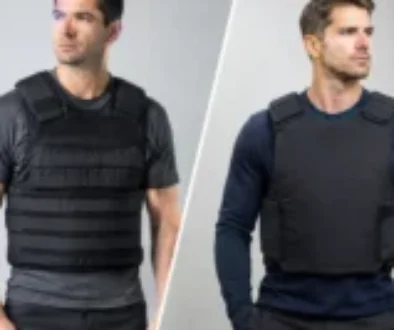
Concealable armor is often the right option when discretion is part of the assignment. It supports a professional appearance for executive protection, corporate security, investigations, and front-of-house roles. Properly fitted soft armor should sit close to the body, cover the vital area, and remain unobtrusive under the officer’s clothing.
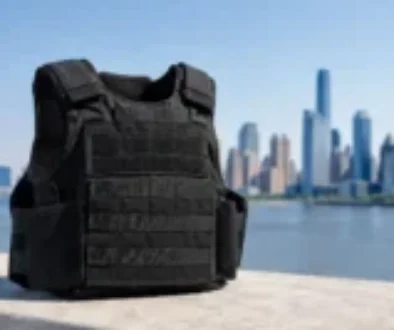
Overt carriers make sense when visibility, identification, equipment carriage, or rapid access to additional protection is more important. They can carry external identification panels, radios, medical equipment, and other mission-essential tools. They may also allow the addition of rifle plates, but the carrier must be compatible with the plate size, thickness, and cut selected.
A scalable system can reduce unnecessary duplication for mixed-duty teams. For example, officers may wear soft armor in an overt carrier as their daily setup, then add rifle plates for high-risk details or emergency deployment. This approach only works when the organization has clear authorization, storage, training, and inspection procedures.
Avoid loading a carrier with every possible pouch. Excess equipment can make it harder to sit, run, access a radio, or draw authorized tools. Keep the front profile clear enough to move naturally and, where relevant, to access life-saving medical equipment without delay.
Fit Is a Safety Requirement
An armor rating is only meaningful when the vest is worn correctly. A vest that is too large can shift, create gaps, and interfere with mobility. One that is too small may leave vital areas insufficiently covered or ride up when the officer sits and bends.
For soft armor, the front panel should cover the upper torso without pressing into the throat when seated. The rear panel should protect the back without extending so low that it drives into the chair or pushes the front panel upward. Side coverage should be evaluated with the wearer standing, walking, reaching, and seated in their normal work environment.
For hard armor, plate placement is particularly important. The top edge of the front plate should sit high enough to protect the upper chest, generally near the suprasternal notch. A plate worn too low leaves critical anatomy exposed, no matter how capable the plate may be on paper.
Sizing should be performed with the uniform layers officers will actually wear. Agencies should also account for seasonal clothing changes and ensure that each vest is assigned, labeled, and adjusted for its intended wearer. One-size-fits-all procurement often becomes one-size-fits-none in the field.
Build a Deployment and Care Standard
Issuing armor without a program invites inconsistency. Security leadership should define when armor is required, what configuration applies to each post, who may add plates, and how officers report damage or suspected impact events. The policy should also address off-duty storage and transfer between personnel.
Armor should be inspected routinely for damaged covers, compromised stitching, moisture exposure, deformation, cracks, delamination, and unauthorized alterations. Hard plates need special attention after drops or impacts, even when exterior damage is not obvious. Follow the manufacturer’s care instructions and never machine-wash ballistic panels or expose them to unnecessary heat.
Keep records of model numbers, serial numbers, dates placed in service, inspections, and any incident involving the armor. This supports accountability, warranty claims, replacement planning, and post-incident review. It also helps managers avoid relying on expired assumptions about what equipment is actually in circulation.
Training should include donning and doffing, fit checks, movement, vehicle use, communication equipment placement, and medical response considerations. Officers need to understand the limits of their protection as clearly as they understand its purpose.
Verify Documentation Before You Buy
Private security companies should require more than a rating printed on a product label. Ask for published test information, applicable certificates, material specifications, and clear confirmation of whether the armor is independently tested or certified to the stated standard. Be precise about whether a claim applies to the complete vest, the ballistic panel, or only a hard plate.
Durability and support matter as much as initial cost. Armor is a long-term safety purchase, and a low price can become expensive if replacement, fit support, or documentation is unavailable when an agency needs it. CANARMOR provides Canadian-made protection, published testing documentation, sizing guidance, and long-term warranty support for professional users who need a defensible equipment decision.
Before ordering, confirm the legal and organizational requirements that apply to your operation. Laws governing civilian possession and use of body armor can vary by jurisdiction, and contracts or licensing rules may set additional standards for uniforms, identification, and authorized equipment. Agency policy should always be at least as clear as the product specification.
The strongest armor program is built around the officer who must wear it. Specify proven protection for the realistic threat, fit it correctly, maintain it with discipline, and make sure every member of the team understands what their equipment can and cannot do. That is how protective equipment earns its place on every shift.