Best Bulletproof Vest for Security Guards
A security uniform does not stop a handgun round, a knife thrust, or a sudden escalation at close range. That is why choosing the right bulletproof vest for security guards is not a cosmetic decision or a box to check for compliance. It is an operational decision that affects mobility, visibility, fatigue, and survivability every shift.
Security work covers a wide range of threat profiles. A concierge officer in a residential tower faces different risks than an armored transport guard, hospital security team, nightclub doorman, loss prevention specialist, or executive protection agent. The vest that works for one post may be the wrong call for another. What matters is matching protection level, carrier style, and wear time to the actual job.
What security guards need from a vest
Most security professionals need body armor that can stay on for long hours without creating constant pressure points, heat buildup, or restricted movement. If a vest is too heavy, too bulky, or poorly sized, it gets adjusted all day, worn incorrectly, or left off when it is needed most. That is a preventable failure.
For many assignments, soft armor rated to NIJ III-A is the baseline starting point. That level is commonly selected for handgun threats and is often the practical choice for guards working public-facing posts, mobile patrol, event security, or access control. It offers meaningful ballistic protection while remaining more wearable than a plate-based rifle setup.
That said, III-A is not a universal answer. Some roles involve elevated risk, targeted threats, or work in areas where rifle exposure is a real concern. In those cases, hard armor plates rated to Level III or Level IV, depending on the threat assessment, may be necessary. The trade-off is obvious – more protection usually means more weight, more bulk, and less comfort over long shifts.
Bulletproof vest for security guards: soft armor or hard armor?
This is where many buyers get stuck. They assume more armor is always better. It is not that simple.
Soft armor is usually the best fit for routine security duties where concealment, comfort, and extended wear matter most. A covert vest under a uniform shirt or jacket helps maintain a professional appearance and avoids drawing unnecessary attention. For front desk roles, hotel security, retail security, and plainclothes assignments, that lower profile can be a serious advantage.
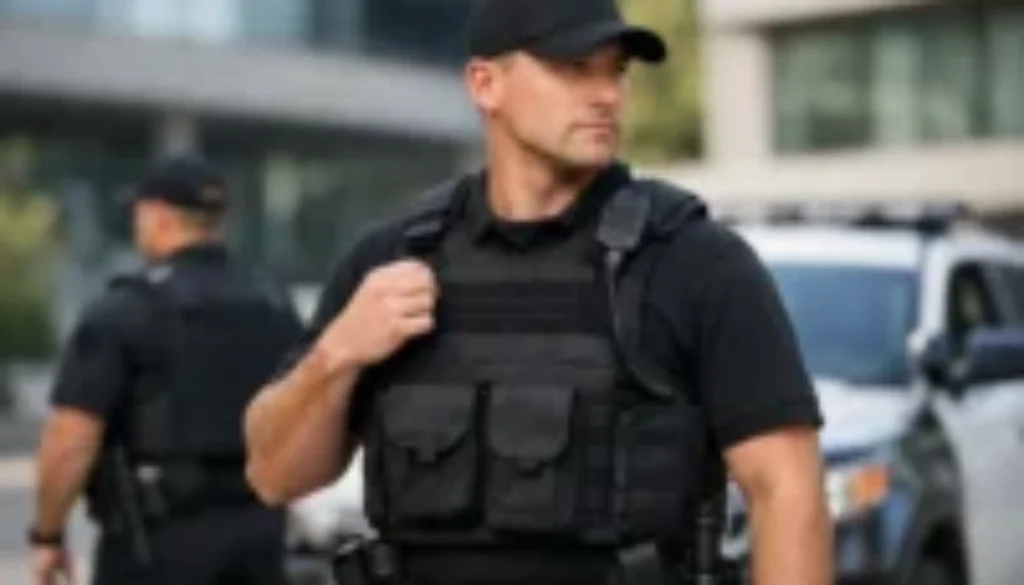
Overt carriers make more sense when visibility, gear integration, and command presence are priorities. An overt bulletproof vest for security guards can carry radios, medical gear, ID panels, and other equipment more effectively than a concealed vest. It is often preferred for site security, vehicle patrol, and higher-risk operations where speed of access matters.
Hard armor plates belong in the conversation when the threat environment justifies them. Cash-in-transit work, critical infrastructure protection, high-risk executive protection, and operations during civil unrest may require rifle-rated protection. But if an officer is expected to wear that setup for ten or twelve hours with frequent movement, the system must be selected carefully. Too much weight can reduce reaction speed and increase fatigue before the shift is even half over.
Understanding ballistic levels without the confusion
Security buyers often see III-A, III, and IV and assume the numbers move up in a simple ladder. They do not always compare in the way people expect.
NIJ III-A refers to handgun protection in soft armor systems. It is widely used in concealable and overt duty vests. NIJ Level III and Level IV are typically hard armor classifications for rifle threats. Level III is generally intended for certain rifle rounds, while Level IV is designed for more demanding ballistic threats, including armor-piercing test rounds under the applicable standard.
The key point is this: buy for the threat you are likely to face, not for the most dramatic label on the page. A properly certified III-A vest that gets worn correctly every day is far more valuable than a heavy rifle setup that stays in the trunk because it is miserable to wear.
Certification matters here. Buyers should look for transparent ballistic standards, test documentation, and clear product specifications. In protective equipment, vague claims are a red flag. If the seller cannot clearly explain the rating, construction, and intended use, keep moving.
Fit is not a comfort issue alone
A vest that does not fit correctly can leave critical areas exposed, print badly under clothing, ride up when seated, or interfere with weapon access and movement. Sizing is a protection issue.
The best vest for a security guard should cover vital zones without blocking natural motion. That means the front panel should not jam into the throat when sitting, and the bottom edge should not dig into the duty belt or abdomen during patrol. Side coverage also matters, but more coverage usually means more heat and a tighter feel. Again, it depends on the assignment.
Body shape, gender-specific fit, and clothing requirements should all be considered before purchase. A vest that works under a blazer for executive protection may not work under a fitted event-security shirt. A patrol officer working outdoors in high heat may need a different carrier and panel cut than someone posted inside a climate-controlled building.
Concealable vs overt carriers
If the goal is discreet daily protection, a concealable vest is usually the right answer. It keeps the armor close to the body, reduces public attention, and works well for low-visibility assignments. The downside is that covert carriers usually offer less room for load carriage and can become uncomfortable if worn over long shifts without proper moisture management.
An overt carrier is easier to put on and remove, easier to adjust, and better suited for guards who need external gear placement. It also presents a more tactical profile, which can be a positive or a negative depending on the environment. In some settings, overt armor supports deterrence. In others, it may escalate tension or conflict with the client’s image expectations.
That is why appearance should never be treated as an afterthought. Security companies often need to balance protection, professionalism, and site-specific presentation standards.
Heat, weight, and shift duration matter more than most buyers expect
A vest can look excellent in product photos and still fail in actual use. Long shifts expose every weakness in materials, panel design, shoulder load distribution, and carrier ventilation.
Security personnel working eight to twelve hours need armor they can realistically wear from briefing to clock-out. Excessive heat retention leads to fatigue and distraction. Poor shoulder design causes neck and upper-back strain. Badly placed closures create rubbing and hot spots. None of those issues show up on a spec sheet as clearly as they show up at hour nine.
This is one reason operationally focused buyers tend to value proven construction over bargain pricing. Cheap armor that shifts, overheats, or wears out early is not a deal. It is a liability dressed up as savings.
What to check before buying
Before committing to any vest, confirm the ballistic rating, intended threat profile, carrier style, coverage area, and replacement policy. Also verify whether the product is designed for concealment, overt duty use, or plate integration. These are not interchangeable categories.
It is also smart to ask practical questions. Will the vest be worn in a vehicle for long periods? Will the user need to run, restrain, or climb stairs? Is a visible tactical look appropriate for the contract? Will the guard carry additional equipment on the vest? Those answers shape the correct setup.
For agencies and firms buying in volume, consistency matters just as much as rating. Standardized fitment, reliable documentation, and accessible support reduce administrative problems and help teams stay deployment-ready. That is where an established ballistic specialist has real value.
When a stab-resistant or combined-threat vest makes more sense
Not every security threat is ballistic. In some sectors, edged weapons are the more likely concern. Hospital security, nightlife security, transit security, and certain public-facing assignments may face a higher risk from knives or improvised sharp weapons than firearms.
In those environments, a standard ballistic vest may not fully address the threat. A stab-resistant or combined-threat solution can be the better operational choice. This is another area where the wrong assumption costs buyers money and may leave personnel underprotected. Threat assessment comes first. Product choice follows.
Making the right call
The best bulletproof vest for security guards is the one that matches the mission, fits correctly, meets a recognized ballistic standard, and will actually be worn every day. That usually means resisting two bad instincts at once – buying the cheapest option available or buying the heaviest option just because it sounds more impressive.
Professional protection starts with a clear-eyed assessment of duty conditions, likely threats, and wear requirements. From there, the right vest becomes easier to identify, whether that means a low-profile III-A concealable system, an overt duty carrier, or a plate-capable setup for higher-risk work. If you are buying for your safety or your team’s, treat the decision with the seriousness the job already demands, and secure protection before the next shift makes the choice for you.