How to Store Ballistic Vest the Right Way
A ballistic vest can lose years of useful service from bad storage long before it ever sees hard use. If you are asking how to store ballistic vest equipment properly, the answer is not complicated – but it does require discipline. Heat, moisture, compression, folding, and careless handling are the main threats, and every one of them is avoidable.
Why storage matters more than most owners think
Soft armor panels, plate carriers, and hard armor components are built for protection, not abuse in a trunk, locker floor, or damp basement. Ballistic materials are engineered to perform within specific conditions. When those conditions are ignored, you risk degrading comfort, fit, and potentially the protective integrity of the system over time.
That matters whether you wear armor on duty, keep it staged for emergency response, or store it as part of a preparedness setup. A vest that is misshapen, moisture-damaged, or compressed under heavy gear is not being maintained to the standard that serious protective equipment deserves.
How to store ballistic vest gear correctly
The best storage setup is simple. Keep the vest clean, dry, flat or properly hung, and away from heat and direct sunlight. Store it in a climate-controlled indoor space where temperature swings and humidity are limited.
For most users, a closet shelf, secure gear cabinet, or dedicated equipment locker inside the home or facility is the right answer. The key is consistency. If your vest spends weekdays hanging properly but weekends baking in a vehicle, the weak point is still the vehicle.
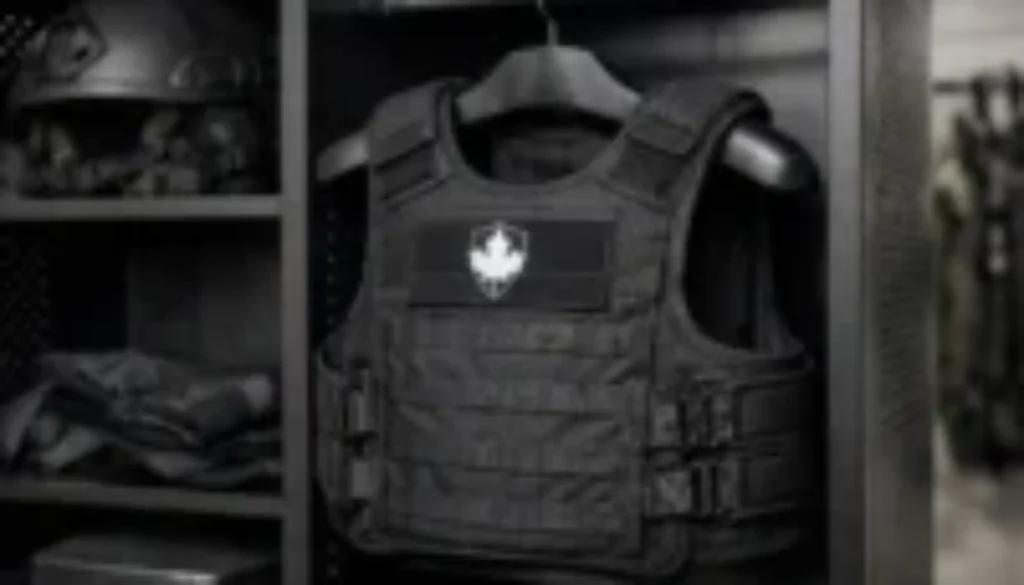
Store it flat or on a proper hanger
Soft armor vests should usually be stored flat when possible. This reduces stress on the panels and helps them retain their intended shape. A broad, supportive surface is better than a narrow shelf edge or a pile of equipment that creates pressure points.
If flat storage is not practical, hang the vest on a sturdy, wide hanger that supports the shoulders evenly. Thin wire hangers are a poor choice because they can distort the carrier and create unnecessary strain. The goal is to preserve the vest’s shape, not just get it off the floor.
Plate carriers are a little more forgiving structurally, but that does not mean they should be crammed into a bag or left slumped in a corner. If plates are installed, make sure the carrier is supported in a way that does not twist the system or put uneven pressure on one side.
Keep it away from heat, UV, and humidity
This is where many vests get damaged. Closets near heaters, garages with seasonal temperature swings, vehicle trunks, and attic storage are all bad options. Excessive heat can accelerate material breakdown. Direct sunlight and prolonged UV exposure can also damage fabrics and components.
Humidity is another quiet problem. Moisture can affect carriers, stitching, hook-and-loop areas, and any non-sealed components. Even when ballistic panels are protected, damp storage encourages odor, mildew, and general wear that shortens usable life.
A cool, dry interior room is the standard. If the room feels comfortable for long-term document or electronics storage, it is usually a much better environment for armor than a garage or vehicle.
What not to do when storing a ballistic vest
The fastest way to create avoidable wear is to treat armor like ordinary clothing or range gear. It is not. Ballistic equipment should never be folded sharply, rolled tightly, or stuffed into an overloaded bag for long-term storage.
Do not stack heavy items on top of soft armor panels. Repeated compression can alter the way the vest sits and may stress the materials. Likewise, do not leave a sweat-soaked vest sealed inside a container after a shift or training block. Trapped moisture is a maintenance failure, not a storage solution.
It is also a mistake to ignore the manufacturer care instructions. Different vest constructions, carriers, and armor materials can have different limits. If the label or documentation specifies storage conditions, follow them. Protective gear is not the place for guesswork.
Clean before you store
Good storage starts with a clean, dry vest. If you put away salt, sweat, dirt, and body oils, those contaminants stay in contact with the carrier and components the entire time the vest is stored.
Remove the ballistic panels from the carrier if the design allows and the care instructions call for it. Clean the carrier according to its instructions, usually with mild soap and water, then let it air dry fully before reassembly. Ballistic panels generally require more caution. They are typically wiped down, not soaked, washed, or machine dried.
Never store a vest that is still damp. Even a little retained moisture can become a bigger issue over days or weeks, especially in enclosed spaces. If you just finished a long shift, let the system dry completely before putting it away.
Storage for daily-duty armor versus emergency-use armor
The right method depends in part on how often the vest is deployed. Daily-duty armor should be stored where it can be accessed quickly without sacrificing protection from heat and moisture. For many officers, security personnel, and executive protection teams, that means an indoor locker or gear cabinet near the point of departure.
Emergency-use armor has a different challenge. Owners often want fast access, which leads them to keep the vest in a vehicle. That is convenient, but it is rarely ideal for long-term storage. If rapid access is essential, rotate the gear indoors whenever possible and minimize the time it spends exposed to extreme temperatures.
There is always a trade-off between immediate access and ideal preservation. The better approach is to build a staged storage plan that respects both. Fast access matters, but so does maintaining the condition of equipment you may trust with your life.
Hard plates need smart storage too
If your setup includes hard armor plates, store them carefully and inspect them regularly. Plates should be kept in a stable position where they will not be dropped, knocked over, or subjected to repeated impacts. Even when a plate looks fine externally, careless handling can create risk.
Avoid tossing carriers with installed plates into truck beds, gear piles, or hard-floor corners. The issue is not just cosmetic wear. Repeated impact and rough treatment can compromise components over time, depending on the plate type and construction.
If plates are removed from the carrier for storage, keep them upright in a secure location or laid flat on a stable surface where they will not shift. The point is controlled storage, not convenience at any cost.
Inspection should be part of storage
Every time you store your vest, you have an opportunity to inspect it. Look at the carrier for torn stitching, worn straps, damaged hook-and-loop areas, and deformation. Check soft armor panels for creasing, unusual lumps, or compromised covers. Review hard plates for visible cracks, edge damage, or signs of impact.
Also confirm labels, serial information, and service-life documentation are still readable. If you rely on armor professionally, record inspection dates. Organized maintenance is part of operational readiness.
Serious buyers do not just purchase armor based on a rating and forget it. They protect the investment, verify condition, and replace components when required. That is how professional standards are maintained.
The best place to store a ballistic vest at home
For home users, the best place is usually a bedroom closet, office closet, or secured interior storage area that stays dry and temperature controlled. Keep the vest off the floor, away from windows, and away from household chemicals or cleaning products.
If children or unauthorized adults may access the area, secure the storage space. Ballistic gear should remain available to the authorized user while still being protected from tampering, misuse, or accidental damage.
Preparedness is not just owning protective equipment. It is keeping that equipment in ready condition. That standard applies whether the vest is used for duty, contracting, property defense, or contingency planning.
When storage damage means replacement is the safer call
If a vest has been stored for extended periods in high heat, exposed to water, crushed under weight, or visibly deformed, do not assume it is fine because it still looks wearable. Storage damage is not always obvious from a quick glance.
When there is doubt, contact the manufacturer or supplier, review the care guidance, and compare the gear against its documented service life and condition. In a critical equipment category like body armor, false confidence is a liability. CANARMOR and other serious manufacturers build around standards, but standards only help if the owner maintains the equipment correctly after purchase.
Store your vest like it may be needed tomorrow, because the day you need it is not the day to discover you stored it carelessly.