Canadian Armor Manufacturer: What Matters
Why CANARMOR ( https://www.canarmor.ca ) Is More Than a Canadian Armour Manufacturer
As a Canadian armour manufacturer, CANARMOR does more than sell protective gear. We manufacture, supply, and support ballistic protection solutions for customers who need clarity, confidence, and proven performance.
When the stakes are real, body armour is not a casual purchase. The manufacturer must be able to explain ballistic ratings, provide clear product guidance, support sizing, and deliver equipment designed for the way you actually work, train, or prepare. If a company cannot explain how its armour is tested, how it should fit, and what level of protection it is designed to provide, the label on the product means very little.
That is why CANARMOR focuses on more than product listings. We help customers understand protection levels, materials, fit, carrier options, and practical use cases before they buy.
The Problem With Vague Armour Claims
Many buyers get stuck because the market is crowded with imported options, vague claims, and product pages that talk about protection without clearly defining threat levels, materials, or compliance.
For law enforcement, first responders, private security teams, security professionals, and serious civilian buyers, that lack of clarity becomes a risk. Buying armour is not like buying apparel or basic tactical accessories. A poor decision can create weight problems, mobility issues, coverage gaps, or false confidence.
CANARMOR understands that protective equipment must be selected based on mission profile, threat level, fit, and daily usability. Armour that looks good online but does not match the buyer’s real-world requirements is not a solution.
What a Canadian Armour Manufacturer Should Prove
A credible Canadian armour manufacturer should be able to answer the hard questions clearly:
What ballistic rating does the armour meet? Is it designed for handgun threats, rifle threats, edged threats, or a combination of risks? Is the protection level aligned with recognized standards such as NIJ III-A, NIJ III, NIJ IV, HG2, RF2, or RF3? Can the company provide documentation, certificates, or a direct explanation of what the product is built to stop?
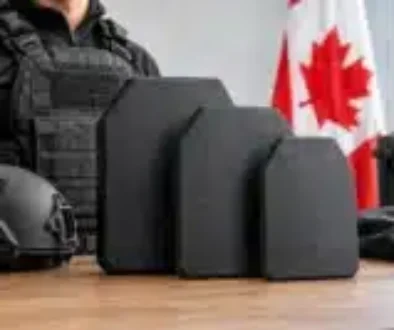
These details matter because armour categories are often misunderstood. Soft armour and hard armour plates serve different purposes. Soft armour is commonly selected for handgun protection, concealment, and daily wear. Hard rifle plates are used when rifle threats are a realistic concern.
A manufacturer that treats all armour as interchangeable is not educating the customer. It is selling around the decision instead of helping the buyer make the correct one.
At CANARMOR, the goal is to help customers understand the difference between body armour systems, ballistic panels, rifle plates, plate carriers, concealable vests, overt tactical carriers, helmets, shields, and other protection products so they can choose the right configuration.
Ballistic Levels Are Not Just Specs on a Page
When evaluating a Canadian armour manufacturer, ballistic levels should be central to the conversation, not buried in fine print.
NIJ III-A / HG2 protection is commonly associated with handgun-rated soft armour. NIJ III / RF2 and NIJ IV / RF3 solutions are generally part of the rifle-protection category. The right choice depends on the expected threat environment, not simply on what sounds strongest on paper.
Higher protection often brings more weight and bulk. More coverage can improve protection but may reduce comfort and mobility over long shifts. A lighter setup may improve movement and wear compliance, but only if it still matches the expected threat profile.
For patrol, executive protection, private security, institutional use, or civilian preparedness, the best answer is often situational. CANARMOR helps buyers evaluate those trade-offs so they can choose protection that makes sense in the real world.
Manufacturing Credibility Starts With Materials and Construction
Armour is not only a rating. It is a complete system of materials, design, construction, fit, and quality control.
The construction method, plate geometry, carrier design, stitching, panel layout, and trauma-reduction approach all affect real-world performance and wearability. A trustworthy armour manufacturer does not hide behind generic phrases like “tactical-grade” or “battle-ready.” It explains what the product is made for, how it is intended to be worn, and where its strengths and limitations are.
For soft armour, buyers should consider flexibility, thickness, carrier design, concealability, and daily comfort. For rifle plates, buyers should consider strike-face material, weight, profile, cut, carrier compatibility, and whether the system supports sustained operational use.
CANARMOR manufactures and supplies protective solutions with these practical requirements in mind. Armour that technically protects but is uncomfortable enough to be left behind does not solve the problem. Fit, sizing, and use-case matching are part of the product strategy.
Why Fit and Coverage Often Decide the Better Buy
Many buyers focus on rating first and fit second. That can be a mistake.
A vest or plate carrier must sit correctly to provide proper coverage and remain usable under stress. Armour that rides too low, leaves side gaps, shifts during movement, or interferes with duty equipment can compromise the entire setup.
A dependable manufacturer provides sizing guidance that is operational, not cosmetic. The objective is not to make armour fit like streetwear. The objective is to place protective coverage over vital zones while preserving enough mobility for driving, running, kneeling, working, or equipment handling.
This is especially important when choosing between covert body armour, overt tactical vests, plate carriers, ballistic panels, and hard armour plates.
For institutional buyers, fit support becomes even more important. When multiple users, deployment scenarios, and procurement cycles are involved, product consistency and support are not just customer service details. They are procurement requirements.
The Difference Between Claims and Documentation
A lot of armour can be described as protective. That does not mean every claim is equally credible.
A serious buyer should expect clear rating information, documentation where applicable, and product descriptions that match the intended threat level. If the language is vague, the risk is usually not hidden value. It is hidden uncertainty.
The better standard is simple: the manufacturer should be able to show the rating, explain the rating, and help the buyer choose based on the intended use.
For a security professional, that may mean comparing a concealable NIJ III-A vest to an overt carrier with rifle plates. For a civilian buyer, it may mean understanding legal ownership, wear considerations, and the difference between home preparedness and daily wear. For an agency or procurement officer, it may involve documentation, repeatable quality, sizing support, warranty terms, and long-term supply confidence.
That is where CANARMOR stands out. We focus on practical buying education, product documentation, and support structures that reduce the risk of choosing the wrong gear. In this category, proof closes more sales than hype ever will.
Support After Purchase Is Part of the Product
Body armour is a high-stakes purchase. The buying process should reflect that.
A manufacturer that offers sizing support, transparent warranty communication, product guidance, and practical after-sale service is not adding extras for appearance. It is addressing the real concerns that prevent buyers from acting.
Many customers delay purchasing armour because they are unsure about legality, protection levels, sizing, weight, concealability, or product compatibility. Good support reduces hesitation. Better support builds trust before an emergency forces the decision.
There is also a financial consideration. Armour is not a disposable purchase. Professional users, agencies, and preparedness-minded customers are usually looking for long-term value, not just the lowest entry price. Lifespan, warranty, replacement terms, comfort, documentation, and quality control should all be part of the comparison.
Cheap armour that creates doubts about performance, fit, or documentation can become expensive in the ways that matter most.
How to Choose the Right Armour Manufacturer for Your Mission
The right armour depends on what you expect it to do.
A patrol officer, private security contractor, first responder, civilian buyer, and institutional procurement officer may all need protection, but they may not need the same configuration. A serious manufacturer should be able to support those differences without pushing one generic solution.
Start with the threat profile. Then evaluate ballistic rating, product type, fit guidance, documentation, warranty confidence, and after-sale support. After that, review practical factors such as concealment, weight, durability, carrier compatibility, and how the equipment integrates with the way you actually operate.
CANARMOR helps customers move from broad product interest to a practical protection system. Whether the requirement is soft body armour, ballistic plates, helmets, shields, tactical carriers, concealable vests, or custom protective solutions, the mission is the same: provide dependable protection with clear guidance and Canadian manufacturing support.
Protection equipment should reduce uncertainty, not add to it. The best time to verify rating, fit, documentation, and support is before you need the gear, not after the threat has already arrived.
Secure the right protection while you still have the time to choose carefully. CANARMOR stands on guard for you.